September 17, 2026 · Can It Fix a Wet Phone Speaker
Water Cleaning Sound: Can It Fix a Wet Phone Speaker?
By admin
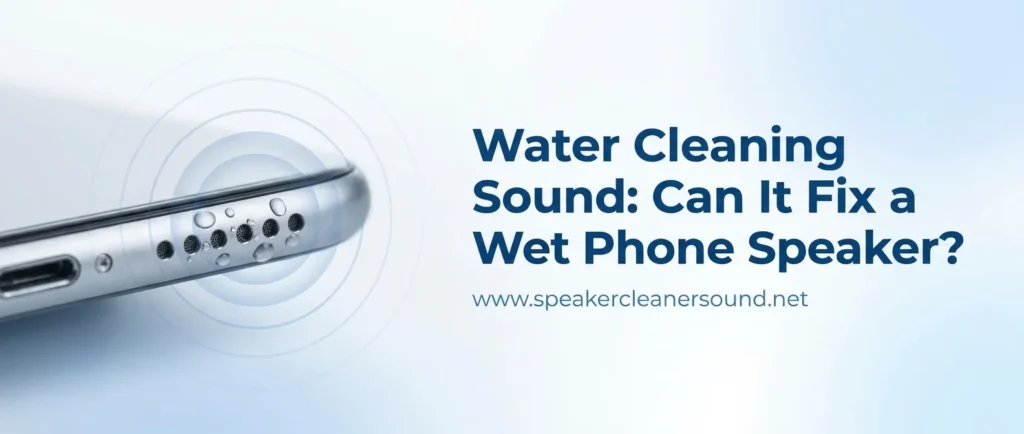
A wet phone speaker usually sounds muffled, crackly, or unusually quiet, and the first fix most people look for is a way to clear it without opening the phone. That search often leads to water cleaning sounds: short tones or vibrations played through the speaker to help loosen trapped moisture. This article looks at what that actually involves, what a “dry sound” means, how humidity and weather relate to sound, and what amplifier clipping has to do with speaker health. It also covers practical steps for a wet phone speaker, and where a cleaning sound helps and where it does not.
What Is a Dry Sound?
The term “dry sound” means different things depending on where you hear it.
In music production, a dry sound is audio with no added effects, such as reverb or echo. It is the raw signal from a microphone or instrument, before any processing.
In the context of phone speakers, people use “dry sound” more loosely to describe a tone played to help clear moisture. This is not an official scientific term, and there is no single frequency universally agreed on as the correct one for this. What is generally understood is that certain low frequency tones can make the speaker diaphragm vibrate enough to help nudge small water droplets out of the mesh.
So in a phone care context, this phrase usually points to a specific tone made for this purpose rather than a defined category of sound. Tools such as Speaker Cleaner Sound work on that same basic idea, using audio and vibration to encourage moisture to move.
Why Do We Feel Better on Sunny Days?
A few ordinary factors are usually behind this. Natural light can affect the body’s internal clock and mood regulating chemicals, so more daylight often means more alertness. Sunlight also supports vitamin D production, which plays a role in general wellbeing, and sunny weather tends to get people outside and moving, which can lift mood on its own. Sunny days are often drier too, which many people find more comfortable.
None of this is medical advice, just common environmental factors. If low mood is a regular pattern, that is worth discussing with a healthcare professional rather than something weather alone can address.
How Do I Fix a Phone Speaker Water Damage?
Start by separating two different situations, since they call for different responses.
- Light moisture, such as water in the speaker mesh from rain, a splash, or condensation. This usually just needs help moving out.
- Actual water damage, meaning water has reached internal components. This is a hardware issue that a cleaning sound is not designed to fix.
Steps for light moisture
- Turn off any audio and stop charging the phone. Charging a wet device can raise the risk of a short circuit.
- Tap the phone gently against your palm, speaker side down, to help loosen visible water.
- Wipe the speaker grille with a soft, dry cloth. Skip cotton swabs or tissue, since they can leave fibers behind or push water further in.
- Try a water clearing sound. A low frequency tone at a moderate volume may create enough vibration to help push small amounts of water out of the mesh. Phone Speaker Cleaner Sound offers tones made for this, so there is no need to guess at the right frequency.
- Let the phone air dry somewhere cool and ventilated for a few hours before testing again. Rice is not a reliable method for this and can leave dust or starch near ports, so it is best skipped.
- Test the speaker afterward with a normal audio clip at different volumes, listening for crackling, distortion, or muffled sound. This guide on testing your phone speaker before and after a cleaning sound walks through a simple way to compare results.
When sound will not be enough
A few signs point to internal water exposure rather than surface moisture: the phone was submerged for more than a moment, dropped in a pool or toilet, or the sound stays distorted after several attempts and a full drying period. At that point:
- Stop repeating the cleaning sound. If a handful of attempts and proper drying time have not helped, more attempts are unlikely to change that.
- Contact the manufacturer or an authorized repair service, since internal moisture can affect the speaker driver, its connector, or nearby circuitry, and that usually needs physical inspection.
- Avoid opening the phone yourself unless you have real experience with electronics repair, since that can cause further damage or void a warranty.
A water cleaning sound can be a helpful first step for light, surface level moisture, but it is not built to reverse damage that has already reached a phone’s internals.
Can Amplifier Clipping Damage Speakers?
This is a different way speakers can get damaged, one that has nothing to do with water.
Clipping happens when an amplifier is pushed past its power limits and cannot output a clean version of the signal it is being sent. Instead of a smooth wave, the peaks flatten out, or clip. That flattened signal carries extra high frequency energy that a speaker was not built to handle for long periods.
A few reasons this can matter for speaker health:
- Tweeters often take the brunt of it. The added high frequency content from clipping tends to reach the tweeter, which can overheat with prolonged exposure.
- Heat, not just volume, causes damage. A voice coil can generally handle only so much heat before its insulation starts to break down.
- A smaller amplifier can be riskier than a bigger one. It is a common assumption that loud volume alone destroys speakers, but a smaller amp pushed hard into clipping at moderate volume can sometimes cause more harm than a well matched, more powerful amp playing the same material cleanly at higher volume.
Keeping gain and volume at levels where the signal stays clean is the simplest way to avoid this, and treating harsh or gritty sounding audio as a cue to turn things down is a reasonable habit.
Can Speakers Sound Different When It’s Humid?
Humidity may influence speaker performance to some degree, though for most everyday listening the effect tends to be subtle.
- Cone materials can absorb some moisture. Speaker cones made from paper or similar fiber composites can pick up a small amount of moisture in humid air, which may slightly affect their stiffness and, in turn, their sound.
- Air density shifts slightly. Humid air is marginally less dense than dry air at the same temperature, which can have a very small effect on how sound travels, usually too small for most listeners to notice.
- Electronics are the bigger concern. The more meaningful risk from humidity is generally not the acoustic effect but moisture reaching electronic connections or a phone’s internal components, which is closer to the water exposure situation described earlier.
- Occasional humidity is not usually a concern. It is sustained exposure, such as a poorly ventilated bathroom or an unprotected outdoor speaker, that can gradually wear materials down over time.
For phone speakers specifically, everyday humidity rarely causes a noticeable problem. Direct contact with water, from rain, a splash, or an accidental drop, is the more common issue, and that is where a water clearing sound is more likely to help.
Frequently Asked Questions
Does a water cleaning sound completely dry out a wet phone? No. It can help move surface moisture out of the speaker mesh, but it does not dry internal components. If water has reached inside the phone, a cleaning sound is unlikely to resolve that on its own.
How long should I try a cleaning sound before giving up? A few short attempts, checking sound quality after each one, is reasonable. If there is no improvement after several tries and a full drying period, it may be time to consider professional repair instead.
Is it safe to use a cleaning sound on any phone? Most modern smartphone speakers can handle moderate volume tones without issue, but it is best to avoid maxing out the volume, since very high volume adds strain rather than extra benefit.
Can amplifier clipping happen with phone speakers too? Something similar can occur if a phone speaker is pushed to very high volume with heavily distorted audio, though built in limiters on most phones tend to reduce this risk.
For a closer look at how the process works in practice, Speaker Cleaner Sound: How It Works and How to Use It walks through it step by step.
Conclusion
A water cleaning sound can help with light moisture in a phone speaker, but it is not a fix for internal water damage. Try the steps above for everyday splashes or rain, and turn to professional repair when the problem goes deeper than the speaker mesh.
Leave a Reply