September 19, 2026 · How Speaker Vibrations May Remove Moisture
Water Vibration: How Speaker Vibrations May Remove Moisture
By admin
If your phone speaker sounds muffled, quiet, or a little distorted after getting wet, you are probably wondering what is going on inside it and whether there is anything safe you can do. This happens often after rain, a spill, a sweaty workout, or a splash near water. In many cases it is not a sign of lasting damage. It usually just means a small amount of water has settled somewhere it should not be. If you want a broader look at this situation first, our guide on what to do when there is water in your phone speaker covers the basics.
One thing people often try is playing a vibration sound through the phone to see if it helps move that water along. This article walks through what that actually means, how it may help, and what you should realistically expect from it.
What Water Can Do to a Phone Speaker
A phone speaker works by moving a tiny membrane very quickly to create sound. That membrane sits just behind a small opening on your phone. When water gets into that opening, even a single drop, it can settle on the membrane or get caught in the mesh covering it.
This does not automatically mean anything is broken. Water changes how the membrane moves. Instead of vibrating freely in air, it now has to push against a thin layer of liquid, and that extra resistance is often why the sound comes out muffled, quieter than usual, or slightly crackly.
In many cases this clears up on its own once the water is gone. The tricky part is that water does not always leave quickly, especially when it is trapped in a tight space like a speaker grille.
What Speaker Vibration Actually Means
When people talk about speaker vibration, they usually mean playing a tone that causes the speaker membrane to move a bit more forcefully than it would during normal music or a call. Certain frequencies, often on the lower end, seem to encourage more physical movement in the membrane.
There is nothing hidden or unusual about this. It is simply using the speaker the way it already works, just with a sound built for movement rather than for listening. Several browser based speaker cleaning tools, including our own speaker cleaner sound tool, are built around this same idea.
How Vibration May Help Loosen Moisture
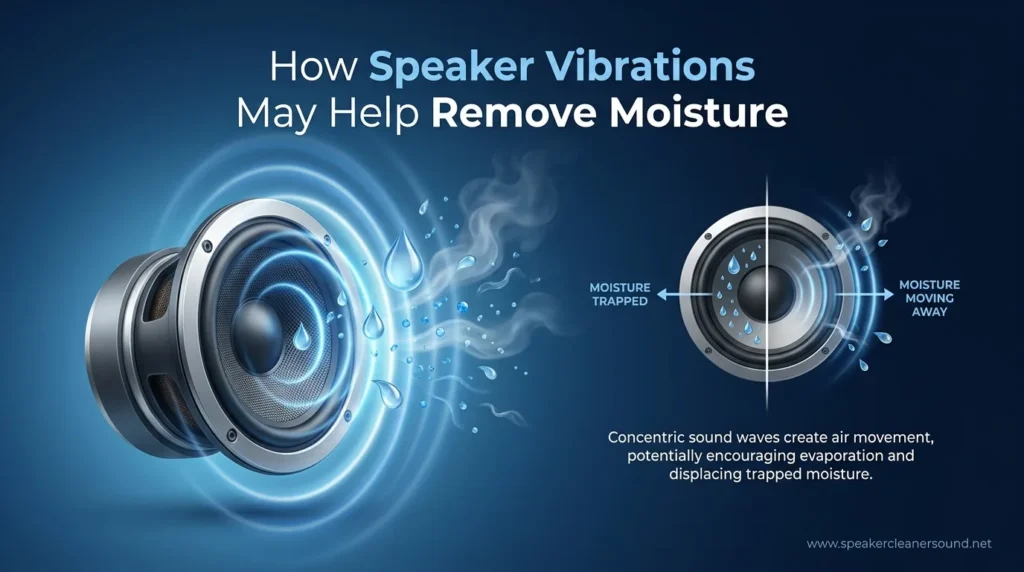
Here is the honest version of how this works, without overstating it. When the membrane vibrates, it can push against water sitting near the opening. Over a number of cycles, that movement may help nudge small droplets toward the edge of the grille, where they can escape more easily through gravity or evaporation.
It is a bit like shaking a slightly damp cloth. One shake will not dry it, but repeated shaking can fling off loose drops. Speaker vibration seems to work on a similar idea, just on a much smaller scale, and the effect can vary from phone to phone.
This is why the method can sometimes help with light moisture from rain, sweat, or a small splash. It was never meant for situations where a phone has been fully submerged or has water sitting deep inside its internal parts. If you are dealing with a heavier soaking, our page on getting water out of your phone speaker goes into more detail on what tends to help and what does not.
Why Sound Might Improve After Trying It
If your speaker sounds muffled simply because of a thin film of water sitting on the membrane, clearing even a small amount of that water can noticeably improve how clear things sound. That is likely why some people notice a difference right after trying a vibration tone.
It is worth being clear here as well. This does not mean the method repairs anything inside the phone. If the muffled sound is coming from something other than surface moisture, such as a damaged speaker cone, blocked mesh, or internal corrosion, a vibration sound is unlikely to change much. If the issue seems to be centered on your earpiece specifically rather than the main speaker, our article on cleaning a muffled earpiece is worth a look.
The Limits of This Method
This is not a guaranteed fix, and it should never be treated as one. At best, it encourages movement in water that is already sitting loosely near the speaker opening. It does not dry out internal components, and it cannot undo damage that has already happened from long term water exposure. We go into this in a bit more detail in can a water cleaning sound really fix a wet speaker, which is worth reading if you want a more realistic picture before trying it.
If your phone has taken on a large amount of water, been dropped in liquid, or is showing other issues like a distorted display, charging trouble, or a constant crackling sound, that points to something more serious than surface moisture. A short vibration sound is not going to resolve problems like that.
A Simple Way to Try It From Your Browser
If you want to try this safely, there is nothing to install. Speaker Cleaner Sound works directly in your phone’s browser, so you just open the page and play the sound while your phone’s own speaker does the work. If you are on an Android device, you may also find our guide on the water eject feature on Android useful for comparison, since some phones already include a similar built in option.
Before You Try It
A few small steps can make this safer and a bit more effective.
Wipe the outside of your phone gently with a soft, dry cloth. Avoid putting anything into the speaker openings, including cotton swabs, pins, or toothpicks, since that can push moisture in deeper or damage the mesh covering the speaker.
Turn the volume up to a comfortable but clearly audible level so the vibration has enough strength to do anything useful.
If your phone recently got wet, let it sit somewhere dry for a few minutes first, rather than putting it straight back in a pocket or bag.
After You Try It
Once you have played the sound, listen to how the speaker sounds during a call or with a short clip of audio. If it sounds clearer, that is a reasonable sign the moisture has reduced. If nothing seems different, waiting a bit longer and trying again can sometimes help, especially if the phone has had more time to air dry. To compare results properly instead of just guessing, our guide on testing your phone speaker before and after a cleaning sound is a good next step, and our online speaker test can help you check things more generally.
When This Method Probably Will Not Help
There are situations where sound vibration is unlikely to make a real difference. This includes phones that have been fully submerged, speakers showing signs of corrosion, physical damage to the speaker cone, buildup that turns out to be dust rather than water, or muffled sound that started before there was any contact with moisture at all.
If dust turns out to be the real issue rather than water, the cause and the best approach are a little different. Our article on cleaning dust from your call speaker and improving sound covers that situation specifically, and our piece on whether audio vibrations can help clear speaker dust looks at the vibration angle in more depth.
When to Consider Professional Inspection
If you have tried a vibration sound a few times, given the phone time to dry naturally, and the sound is still muffled, distorted, or has stopped working altogether, that usually points to something beyond surface moisture. At that point, it is worth having someone qualified look at the internal components rather than continuing to rely on sound alone.
This tool and this website are meant to help with light, everyday moisture situations. They are not a substitute for professional repair when there are real signs of hardware damage.
Frequently Asked Questions
Can a vibration sound completely remove water from my phone speaker?
Not always. It may help move small amounts of surface moisture, but it does not guarantee full removal, especially with larger amounts of water.
Is this safe to try on any phone?
For most phones, yes, since it simply uses the speaker the way it is meant to be used. If a phone has already suffered serious water damage, sound alone will not fix what is happening inside it.
How many times can I try the sound?
There is no strict limit. If repeated tries over a reasonable time show no improvement, it likely means the moisture is not responding to this method, or the problem is not caused by surface water at all.
Does a louder vibration work better?
A comfortable, clearly audible volume is usually enough. Turning it up further is unlikely to change the outcome in any meaningful way.
Can this help with dust instead of water?
It may help with light dust as well, though the approach and what you can expect are a little different from moisture removal. You can also try our online speaker check to see how your speaker is performing either way.
Conclusion
Speaker vibration is a simple, low risk method that may help move small amounts of surface moisture away from a phone’s speaker opening, which can sometimes improve muffled or quiet sound. It is not a guaranteed fix, and it will not resolve deeper hardware damage or heavy water exposure. Used sensibly, alongside basic drying steps and a bit of patience, it can be a reasonable first thing to try before assuming the worst about your phone’s speaker.
Leave a Reply